Historical-Political Thriller Slava Prepares for Its Premiere, Reveals First Behind-the-Scenes Images

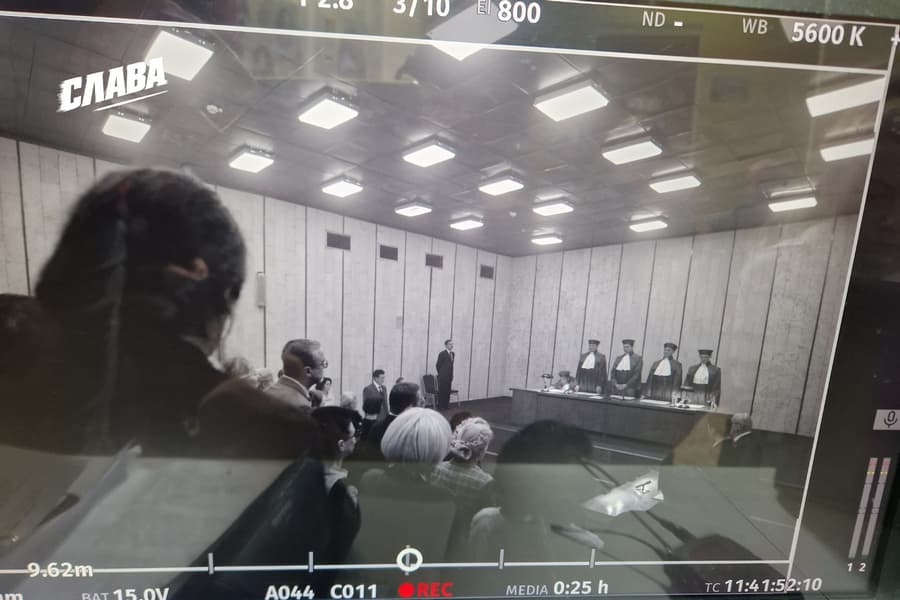
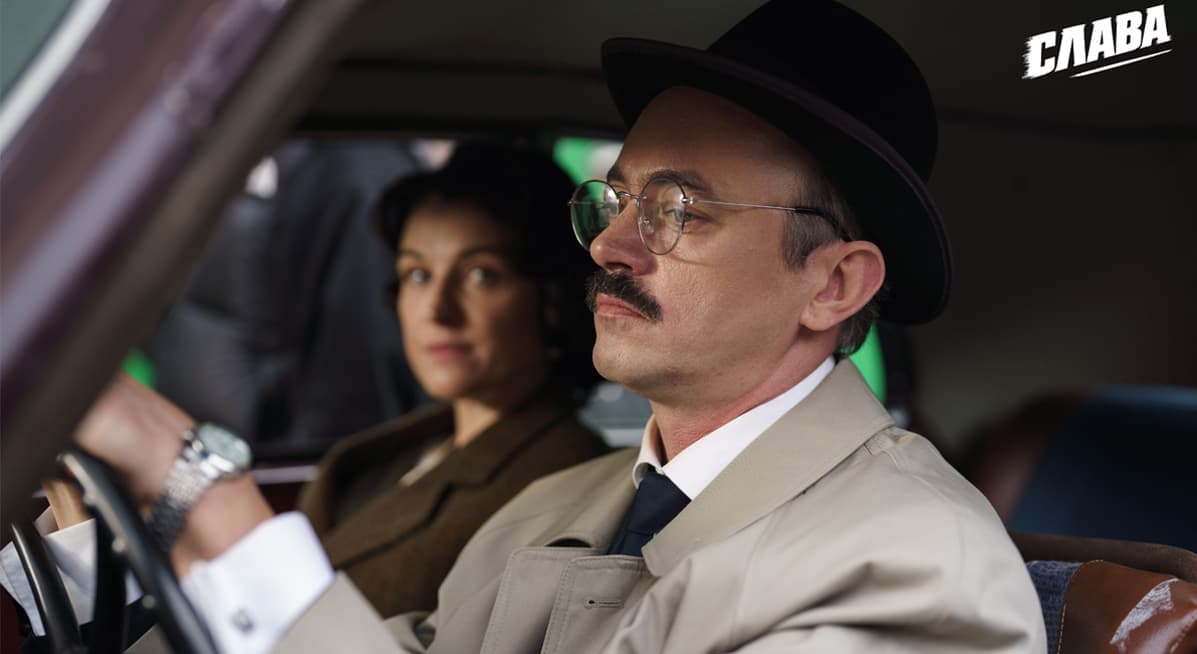
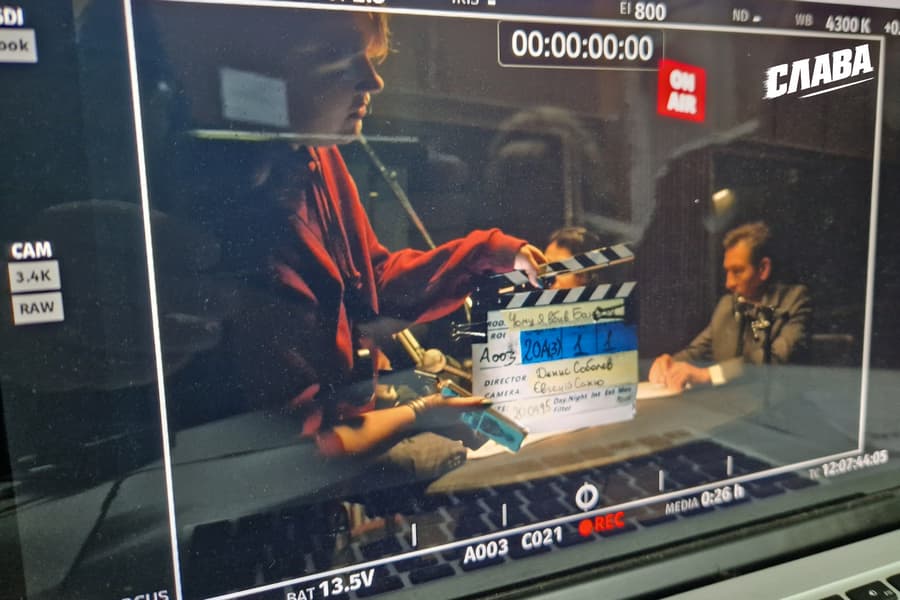
Ukrainian historical-political thriller Slava, directed by Denys Soboliev, has been completed and is preparing for its premiere. The filmmakers have unveiled the first behind-the-scenes images from the production and shared details about the making of the film.
A private screening has already taken place in Lviv, while the creative team is currently developing the festival strategy for its international premiere. The film tells the story of the trial of KGB agent Bohdan Stashynsky, who assassinated Stepan Bandera and Lev Rebet.
However, Slava is neither a biographical film nor the story of a single individual changing the course of history. Instead, it is “a political drama about Ukrainians fighting for the right to be heard by the world.” The lead roles are played by Liliia Matviienko as the resilient Slava Stetsko and Yurii Khvostenko as the young and determined Yaroslav Stetsko. «New Ukrainian Cinema» learned these details from material published by LiKE in UA.
Slava Tells the Story of the Trial of Stepan Bandera’s Assassin
The film is set in 1962 in the German city of Karlsruhe. KGB agent Bohdan Stashynsky, the man responsible for the high-profile assassination of Organization of Ukrainian Nationalists (OUN) leader Stepan Bandera, stands trial. Slava and Yaroslav Stetsko, together with their associates, decide to transform the proceedings into an unprecedented international tribunal exposing the entire Soviet system of political assassinations. To reveal the Kremlin’s campaign of terror to the world, they must confront not only Soviet intelligence services but also the hesitation of Western allies.
According to director Denys Soboliev, the idea for the film emerged from his interest in the trial of KGB agent Bohdan Stashynsky, who carried out the assassinations of Ukrainian political figures Lev Rebet and Stepan Bandera in Munich. During the public trial, the international community heard for the first time detailed testimony about the Soviet Union’s use of political assassinations abroad as an instrument of state policy.
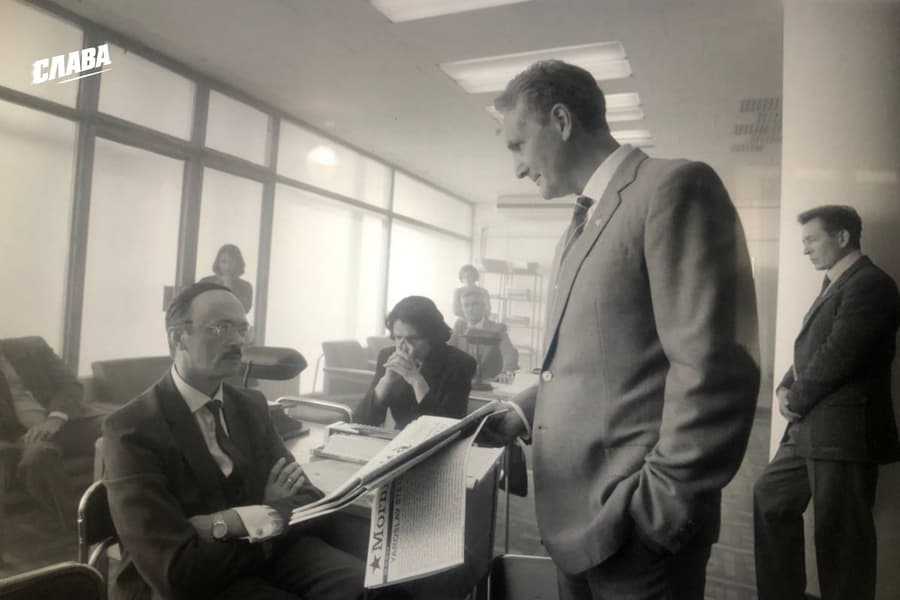
The filmmakers deliberately chose not to create a conventional courtroom drama or a biographical film. “We did not want to make yet another post-Soviet film portraying the KGB as an all-powerful organization that controls everything and cannot be challenged. What interested us instead was why such a vast system feared people who had neither a state of their own, nor an army, nor significant resources, yet continued to speak about an independent Ukraine,” said director Denys Soboliev.
The film’s central character is Slava Stetsko, through whom audiences are introduced to the world of the Ukrainian political diaspora, its information campaign, and its efforts to persuade the international community to focus not only on the individual assassin but also on the Soviet system that orchestrated these crimes.
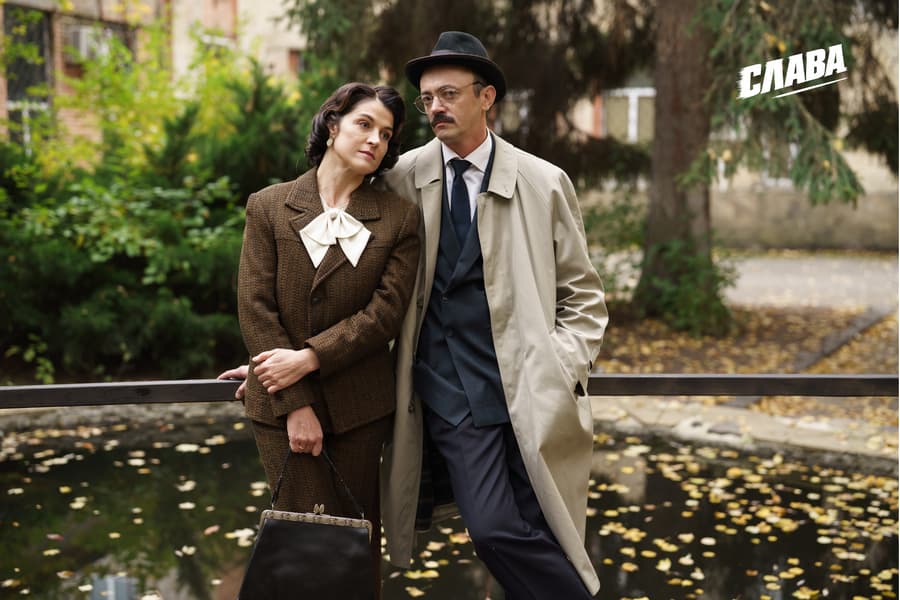
According to Soboliev, Slava goes far beyond reconstructing historical events. It is not simply a film about the trial of Bohdan Stashynsky or the activities of the KGB. Instead, it explores the nature of an empire that, regardless of its name, flag, or political system, seeks to deny other nations the right to their own history, culture, statehood, and future.
For this reason, the film draws parallels between the events of the 1960s and the present day, showing that while the instruments of pressure have evolved — from political assassinations, intelligence operations, and propaganda to modern information technologies — the underlying logic of imperial policy has remained unchanged.
“For international audiences, the film offers an opportunity to understand that today’s war is not an accidental conflict but the manifestation of a much older imperial tradition that, for centuries, has denied Ukraine’s right to exist as an independent nation,” the director emphasizes.
At the same time, he says, Slava is also a story for Ukrainian viewers about reclaiming their historical memory and honoring those who continued the struggle for independence even without having a state of their own.
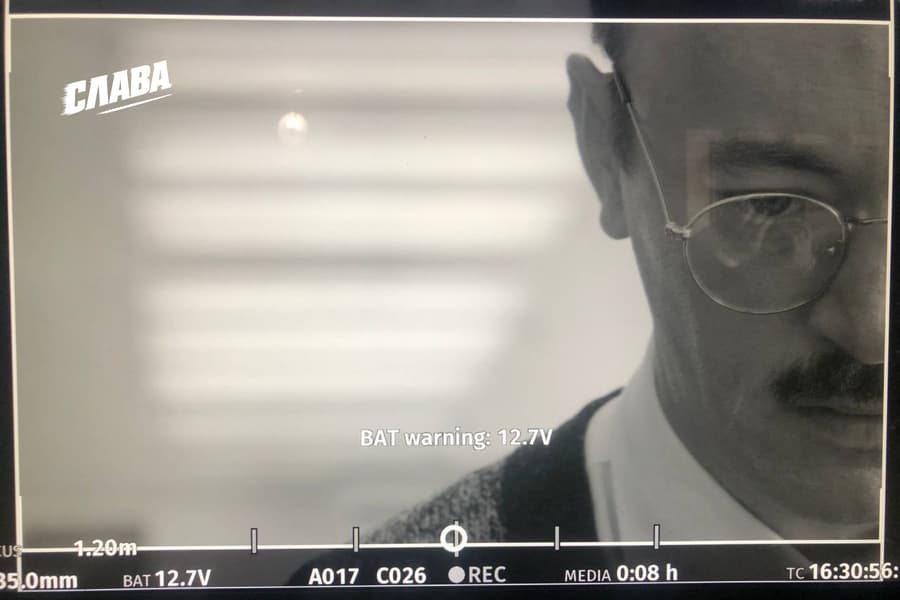
How the Filmmakers Recreated the Authentic World of Slava
Preparation for the film lasted several years and required extensive research into archival materials, KGB documents, eyewitness testimonies, and historical sources. According to Denys Soboliev, even during filming and post-production, the team continuously verified every detail—from the authenticity of dialogue and documents to the work of journalists, the operations of intelligence agencies, and the political atmosphere of the era.
The filmmakers conducted an in-depth study of Soviet intelligence operations. According to Soboliev, archival records reveal not only the scale of the Soviet repressive apparatus but also its deep fear of the Ukrainian liberation movement.
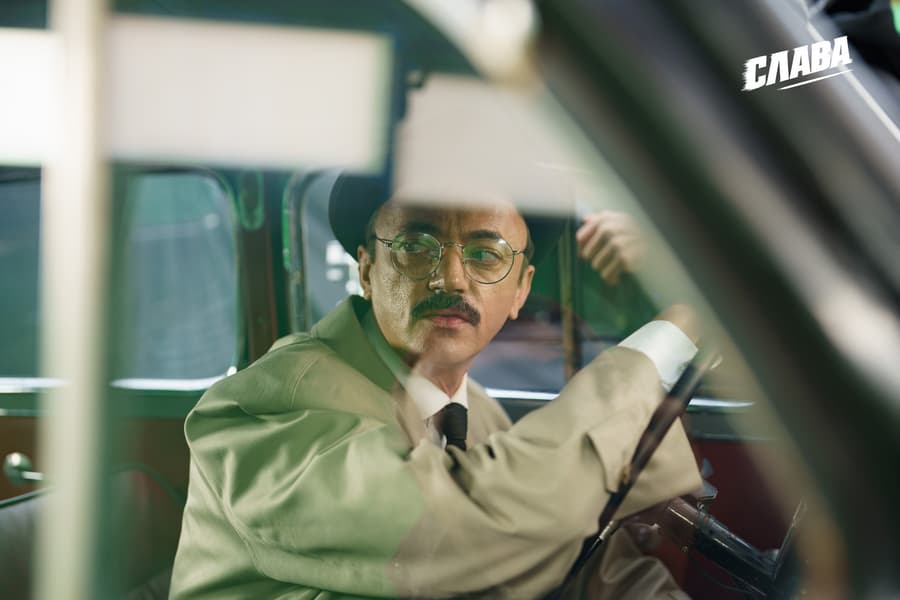
“The most terrifying thing is how ordinary evil became. People could be monitored for years while plans for their kidnapping or assassination were prepared, yet the documents treated it as routine office work,” the director says.
At the same time, he notes that the intelligence archives also reveal genuine fear.
“They feared not only armed resistance. They feared words, newspaper articles, press conferences, public speeches, and even the very existence of the Ukrainian political diaspora.”
The visual concept of Slava also carries symbolic meaning. The creative team says it drew inspiration from the works of Heorhii Narbut and Nil Khasevych, aiming not only to recreate the atmosphere of the period but also to remind audiences of the artists who helped shape Ukrainian visual culture. As a result, the filmmakers rejected decorative 1960s stylization in favor of the aesthetic of a black-and-white political poster.
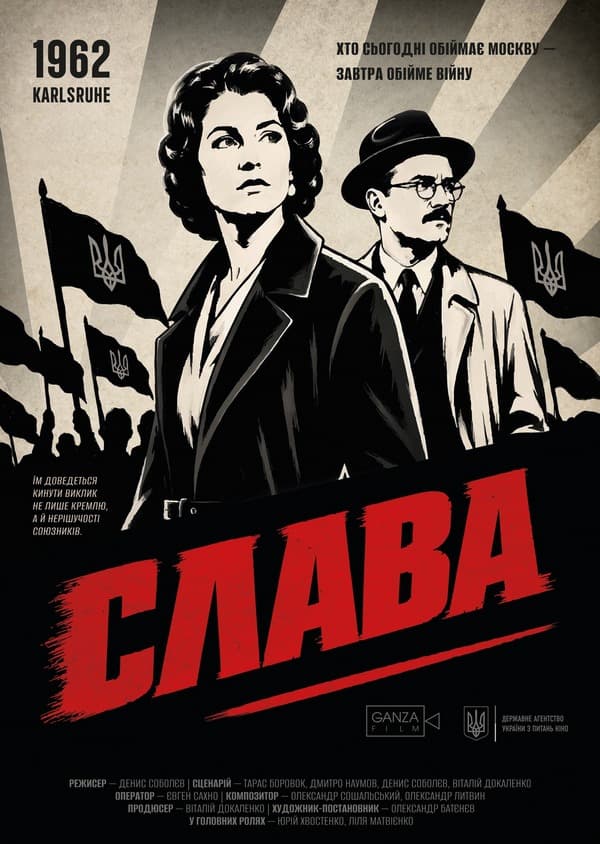
To recreate the atmosphere of the 1960s, the team employed visual effects that remain almost invisible on screen. These effects were used to remove modern elements from the frame, restore historical urban landscapes, and seamlessly integrate dramatized scenes with archival footage.
The filmmakers also devoted special attention to the film’s sound design. Sound producer Volodymyr Tretiakov explains that the team sought to recreate the authentic soundscape of the era, allowing audiences to experience the period not only through sets and costumes but also through the sounds of city streets, interiors, transportation, and everyday voices.
“Music plays a particularly important role in the film. It does not merely accompany the story; it reveals the characters’ inner emotional states, highlights key dramatic moments, and expresses feelings that the characters themselves cannot always put into words.”
Slava is produced by Ganza Film with the support of the Ukrainian State Film Agency (Derzhkino). The team is currently developing its festival strategy. Potential venues for the international premiere include the Tallinn Black Nights Film Festival, FilmFestival Cottbus, as well as film festivals and special screenings in Canada for international audiences and the Ukrainian diaspora.